Works
Schedule a call


bitaksi
Spearheaded Bitaksi's design transformation over two years, establishing two comprehensive design systems (the current one built independently), co-leading a full application rebrand, single-handedly redesigning the corporate website with interactive Rive animations, and designing a critical internal operations panel from scratch.
bitaksi

Details
Client
Bitaksi

Industries
Transportation / Mobility
My role
Co-Lead Product Designer
Tools
Figma
•
Rive
•
Miro
Project Duration
Jul 2023 - July 2025
•
2 yrs
Problem
Addressed a range of challenges including initial design inconsistencies and lack of a scalable design foundation, an outdated user interface requiring a full rebrand, the need for a modern and interactive corporate web presence, and inefficiencies in internal operations requiring a dedicated management panel.
Goals and objectives
To create a cohesive, modern, and user-centric experience across all Bitaksi platforms (passenger app, driver app, website, internal panel). Key objectives included:
- Establishing and evolving robust design systems to ensure consistency and scalability.
- Successfully rebranding the application to enhance brand perception and user appeal.
- Improving usability across all digital touchpoints.
- Developing an intuitive and efficient internal tool to streamline complex operational processes.
- Modernizing the company website to better showcase products and engage users.
My role & Responsibilities
In-house (1 year, sole designer)
Established the initial design system for the existing application. Designed key features such as the driver reporting screen (driver app), driver subscription flows (monthly/weekly), and the integration of the service fee in the passenger app.
Contractor (1 year)
Collaborated with Ali Düzenli on the comprehensive rebranding of the entire application. Independently created and developed the new, current design system. Single-handedly redesigned the corporate website, including implementing an interactive Rive animation for product showcasing. For the last 5 months, designed the entire Bitaksi operations panel (internal tool) covering data visualization, taxi driver membership management, trip management, fare calculations, and campaign creation.

“This case study will delve into the strategic process of developing Bitaksi's current design system and executing a comprehensive application rebrand. It will also touch upon other key projects that demonstrate a holistic approach to product design, including the initial design system, the corporate website redesign, and the development of the internal operations panel.”
The Challenge: Laying the Groundwork (Initial In-House Period)
Problem
Lack of a unified design language, inconsistencies.
Solution
Creation of the first design system for the existing app.
Process
Audit & Analysis
Conducted a thorough audit of the existing application (passenger and driver apps) to identify all UI components, styles, and inconsistencies.
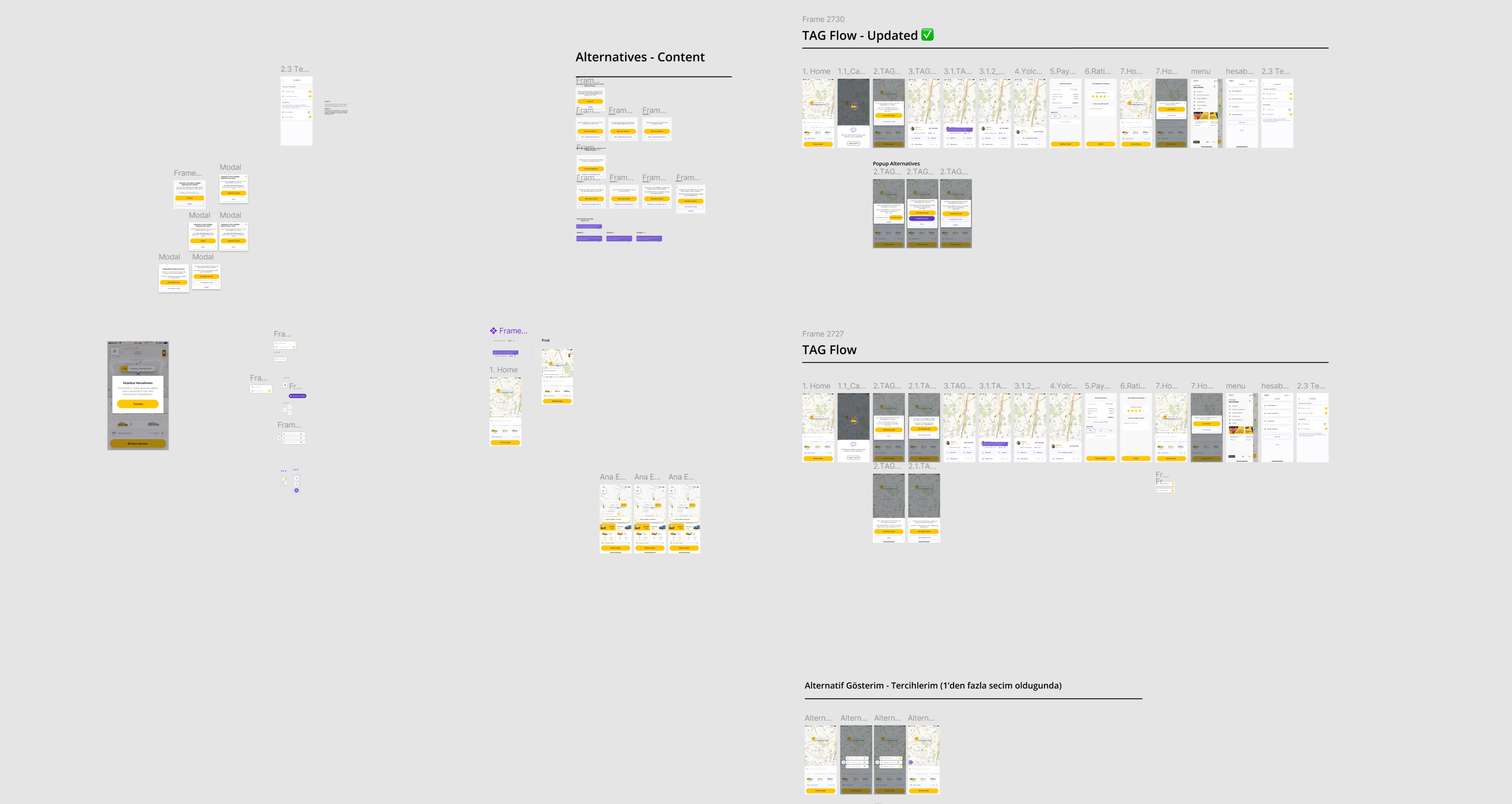
Overview of disorganized Bitaksi app screens in Figma prior to design system implementation.
Defining Foundations
Established core elements like a unified color palette, typography scale, spacing guidelines, and iconography.
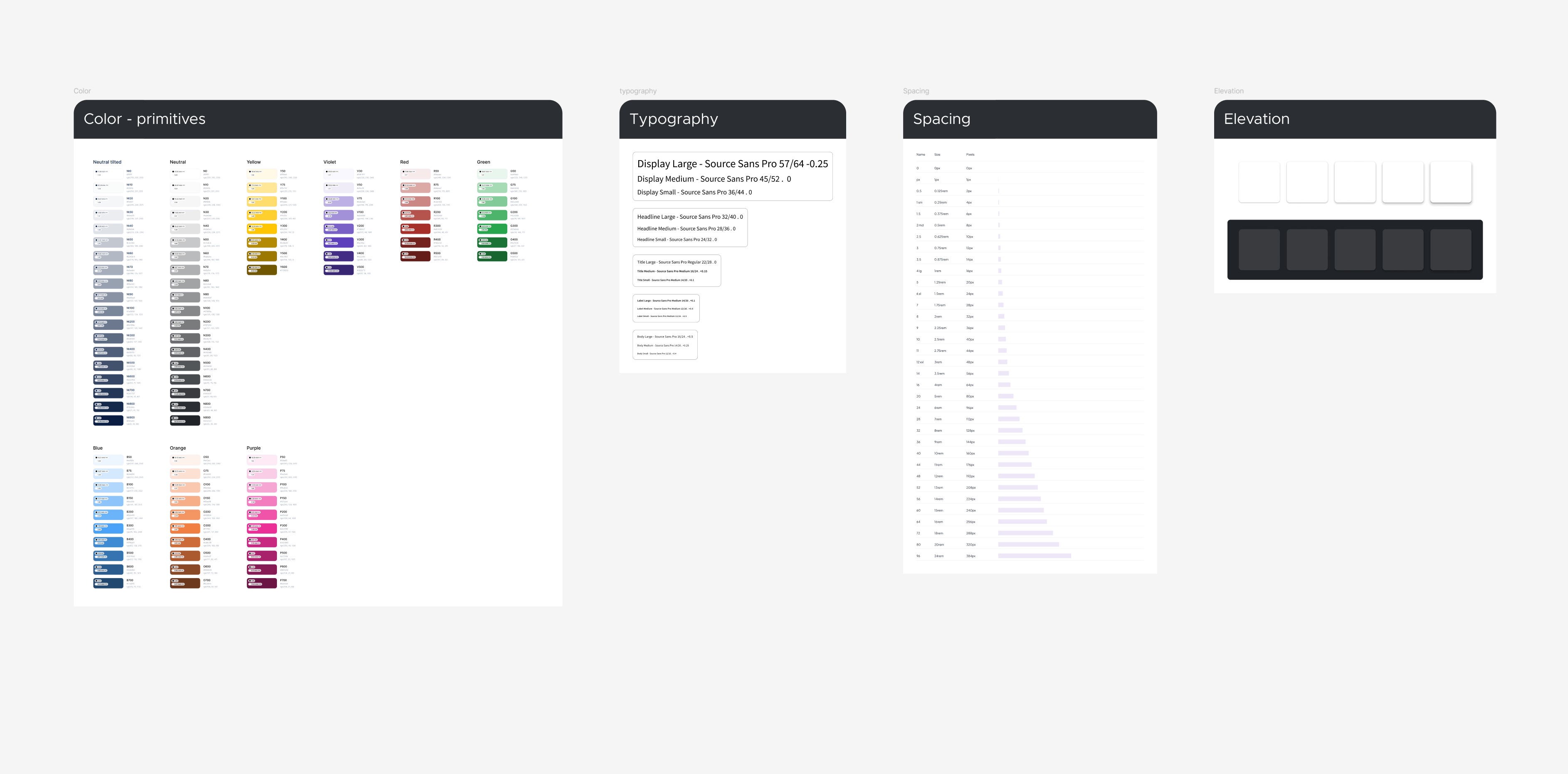
Detailing the foundational styles of the Bitaksi design system, including color primitives, typography, spacing, and elevation
Component Development
Designed and documented a basic library of reusable components (e.g., buttons, input fields, cards, navigation elements) in Figma.
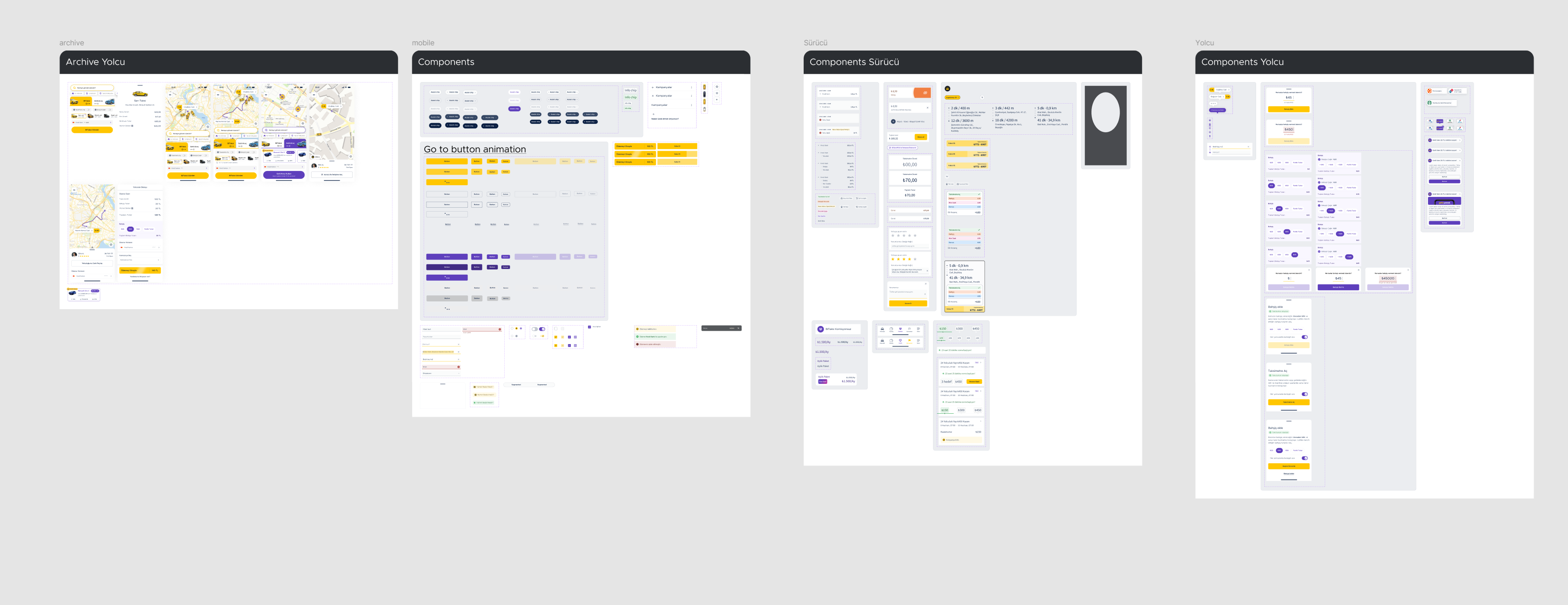
A collection of UI components from the Bitaksi design system, including buttons, input fields, and navigation elements, displayed within their respective application contexts in Figma
Documentation & Handoff
Created initial documentation for developers on how to use the system and its components.
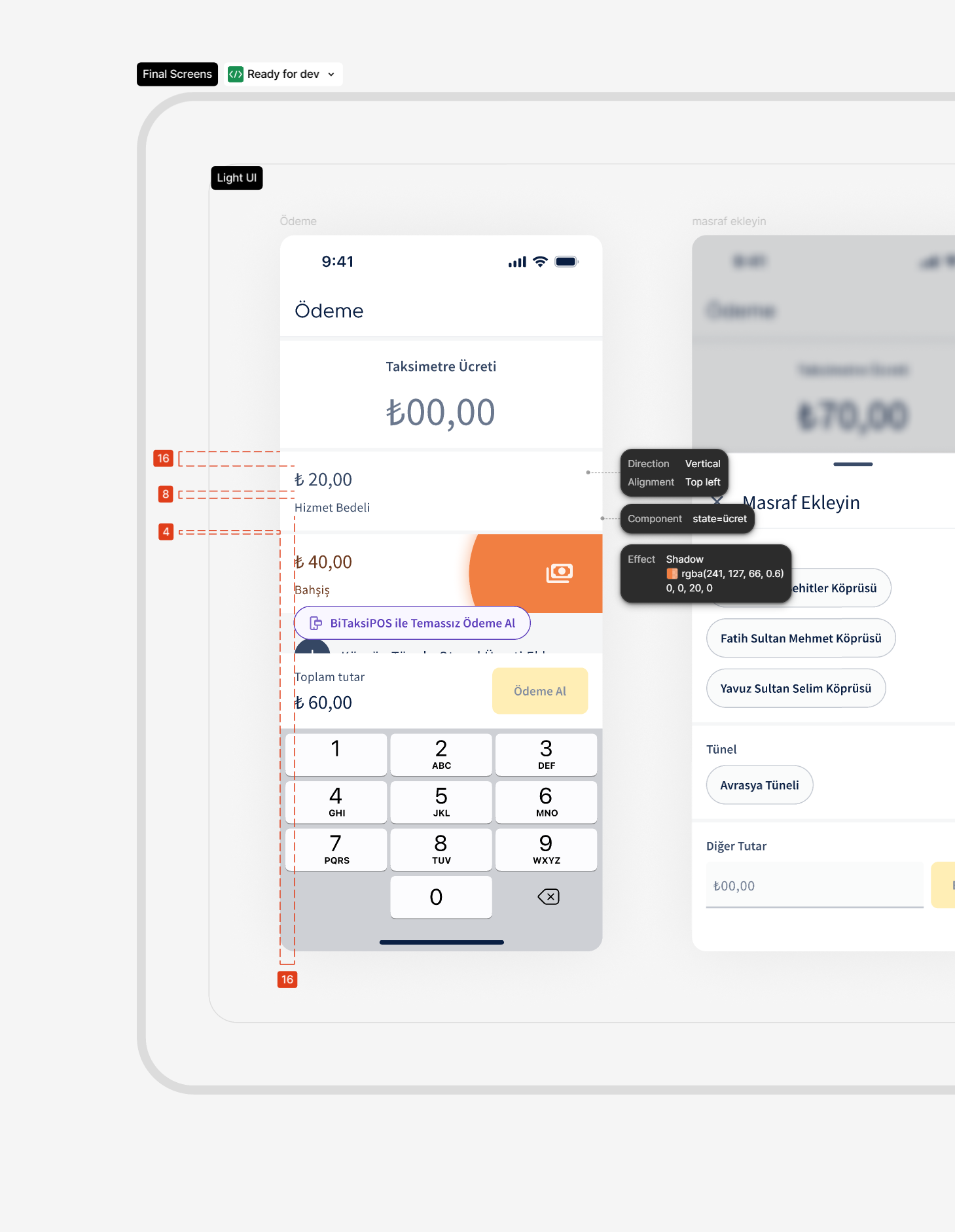
Example of developer handoff documentation: Bitaksi payment UI with design specifications, prepared for development.
Impact
Improved Consistency
Led to a more visually cohesive user interface across the application.
Increased Efficiency (Design & Development)
Streamlined the design process for new features and made development faster by providing ready-to-use components
Foundation for Future Growth
Provided a foundational structure that, while basic, helped stabilize the product's UI and set the stage for future, more comprehensive system development.
The Transformation: Rebrand & New Design System
Context
The evolving needs of Bitaksi and the strategic decision to undertake a comprehensive application rebrand. Transition from sole in-house designer to a contractor role, collaborating with external designers (Ali Düzenli) for the rebrand while independently leading the new design system's creation.
Problem
The existing application's UI/UX felt outdated and inconsistent. A more modern, scalable, and robust design foundation was needed to support the company's growth and new brand identity. The initial design system was not comprehensive enough for a full-scale rebrand and future product development.
Solution
Partnering with Ali Düzenli to redefine Bitaksi's visual identity, including logo, color palette, typography, and overall look and feel.
Building a new design system from the ground up in Figma to embody the new brand identity and provide a scalable framework for all Bitaksi products.
Process
Research & Planning
Analyzing the shortcomings of the first system, defining the scope and goals for the new system (e.g., full component coverage, accessibility considerations, clear documentation, tokenization strategy).
Atomic Design & Component Development
Systematically designing and building a comprehensive library of components in Figma, from atoms (colors, typography, icons, spacing) to molecules (buttons, input fields) and organisms (cards, navigation bars, modals). Ensuring components were flexible, reusable, and adhered to the new brand guidelines.
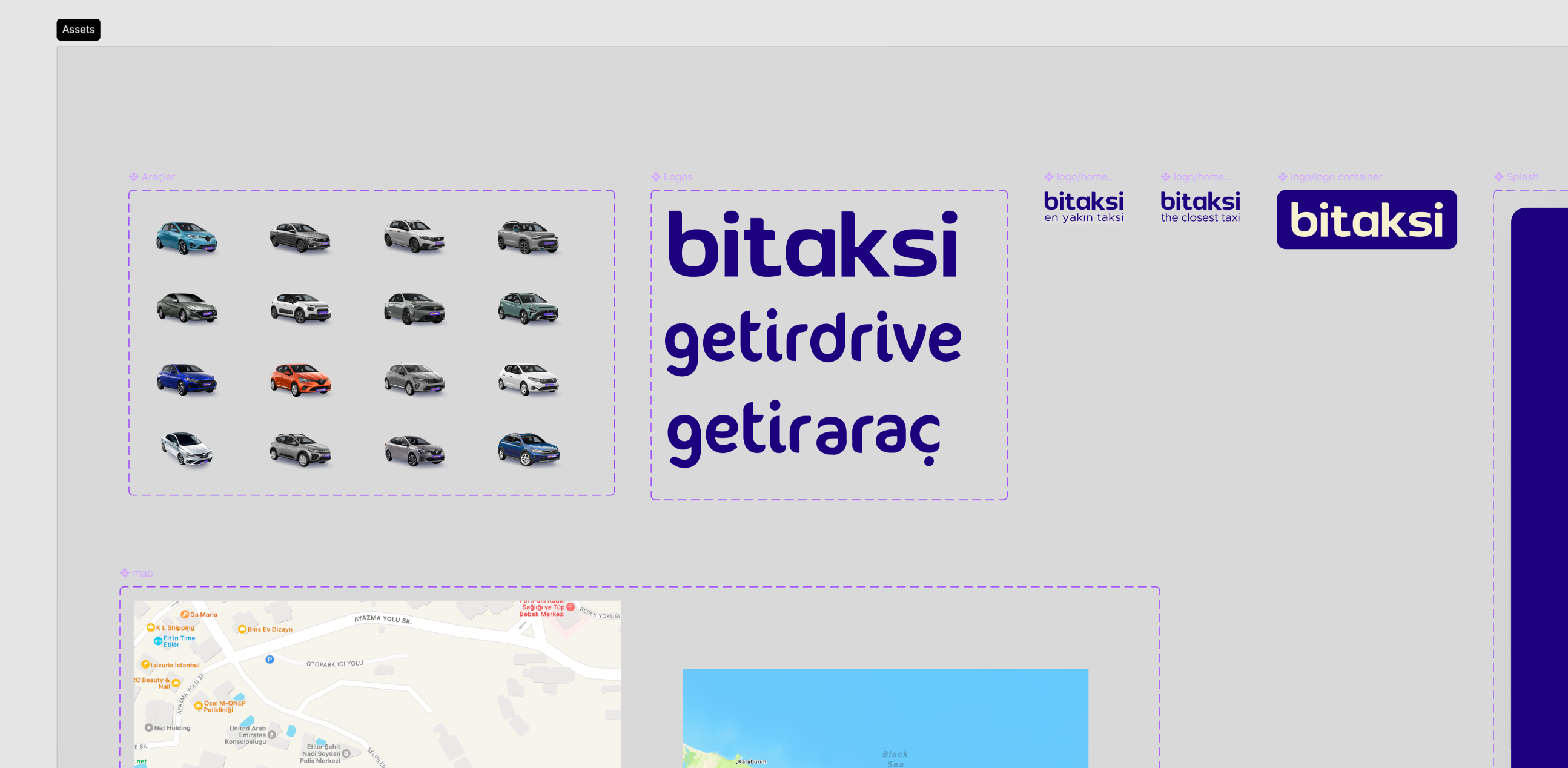
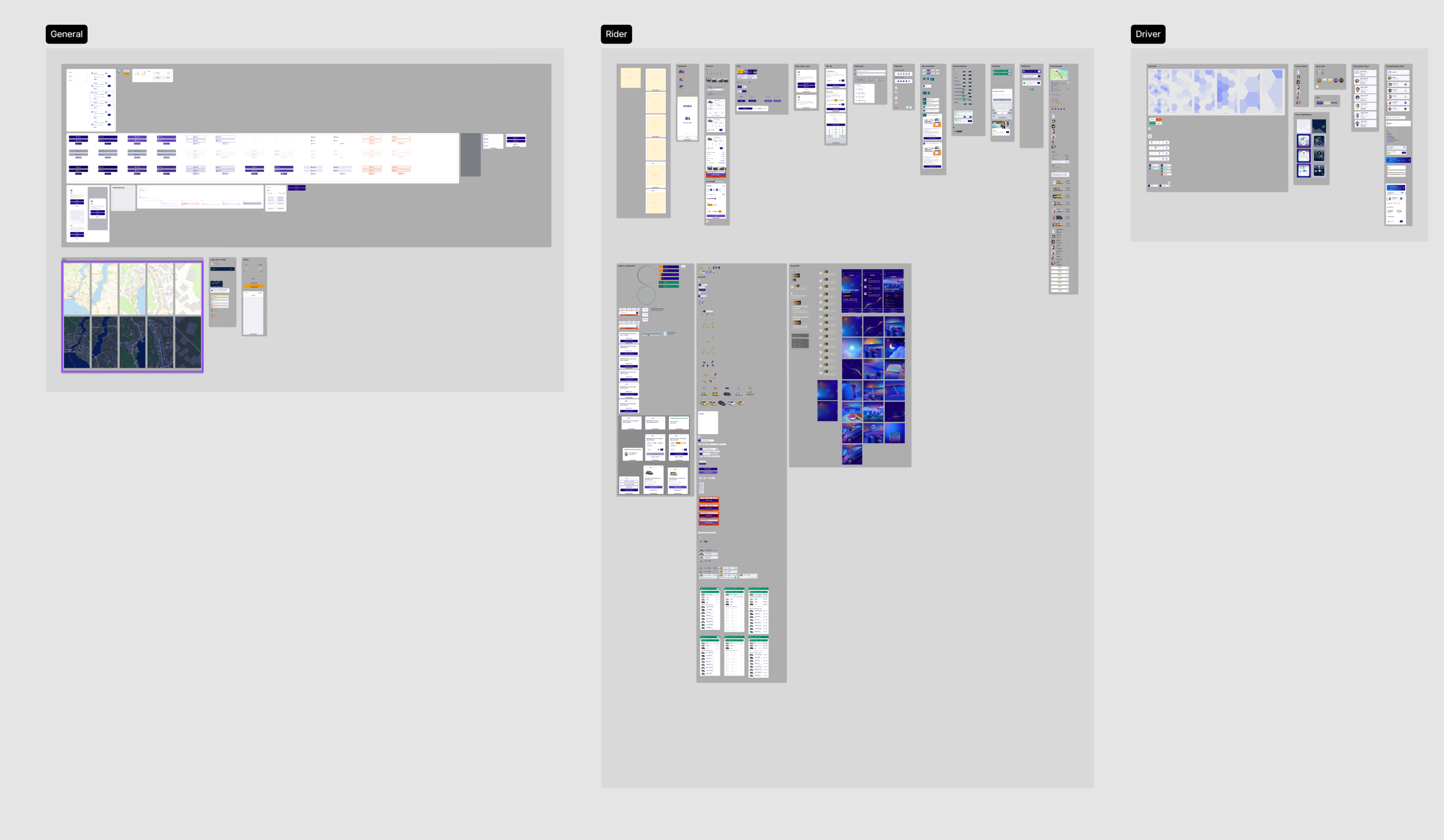
Collection of design assets and UI screens from the Bitaksi ecosystem, representing the elements covered in the detailed design system documentation.
Documentation & Guidelines
Creating detailed documentation for each component, including usage guidelines, states (default, hover, active, disabled), accessibility notes, and code snippets/specs for developers. Establishing clear guidelines for typography, color usage, spacing, and information architecture.
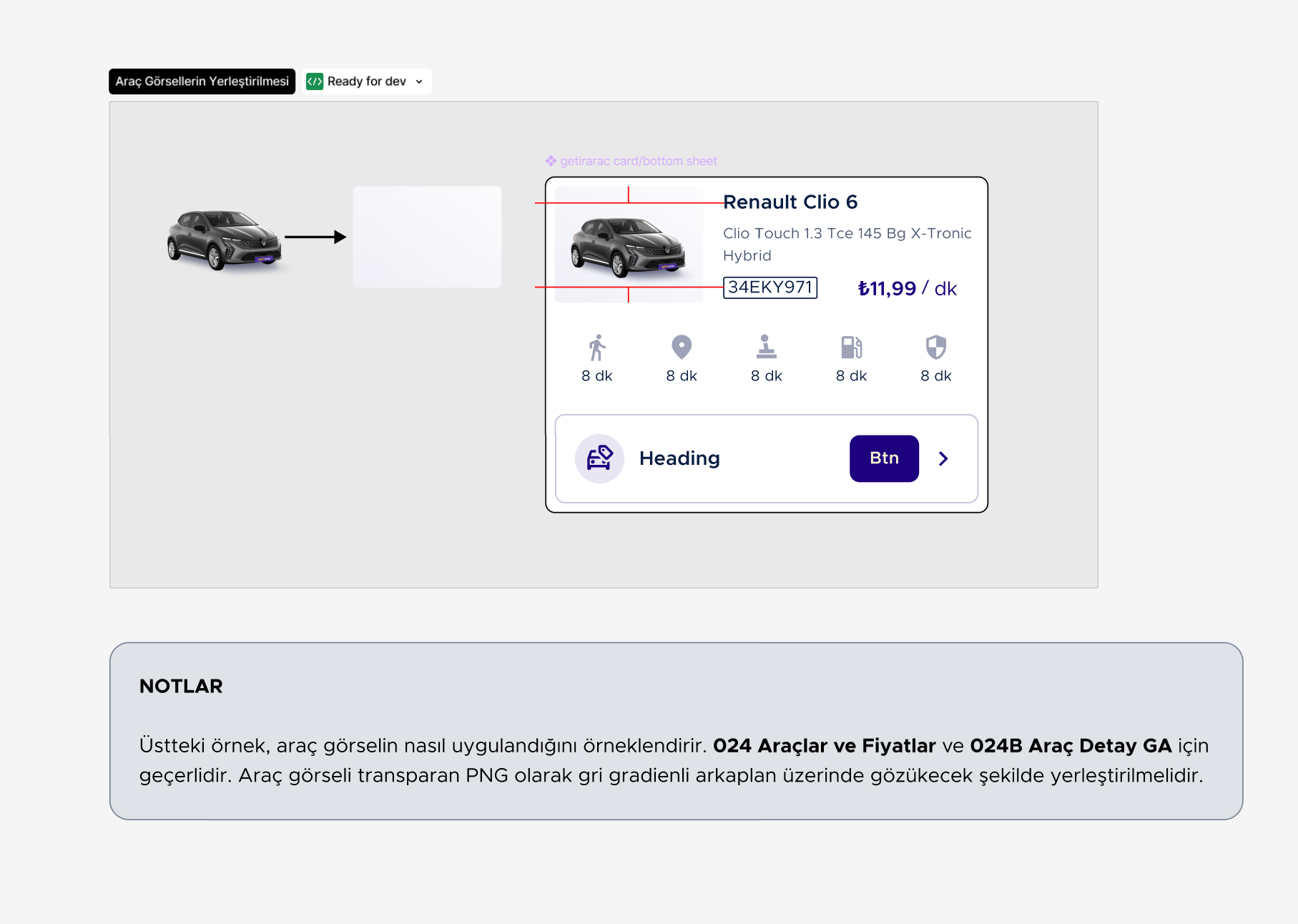
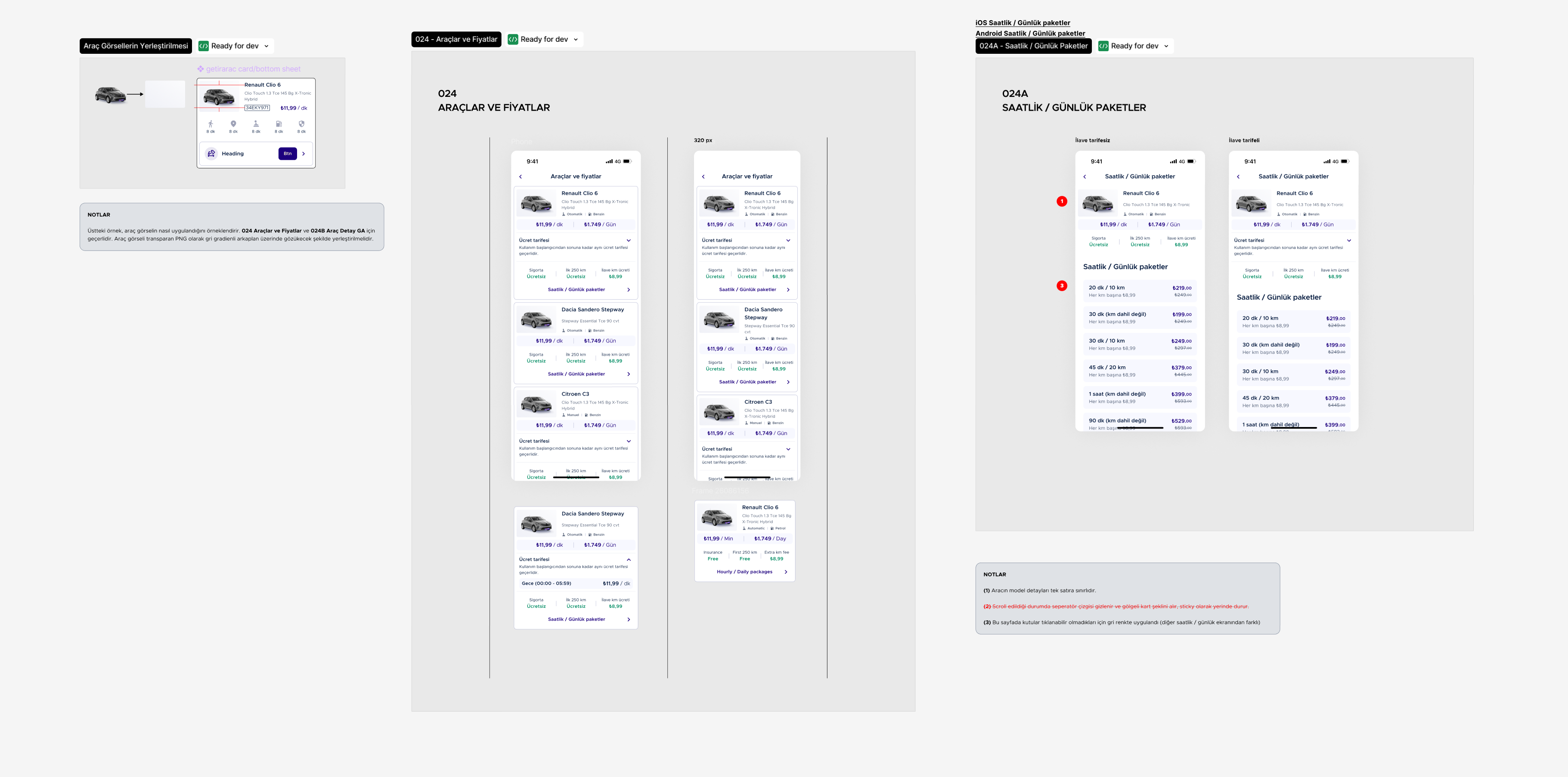
Collection of Figma screens and notes from the Bitaksi design system, highlighting component usage guidelines and consistent application, reflecting the system's maintenance and evolution strategy.
Governance & Evolution Strategy
Planning for how the design system would be maintained, updated, and adopted by the wider team. Implementing version control and a process for requesting new components or changes.
Impact
Modernized Brand & Enhanced User Perception
The rebrand significantly refreshed Bitaksi's image, making it more contemporary and appealing.
Vastly Improved UI/UX Consistency
The new design system ensured a unified look and feel across all application screens and platforms.
Increased Design & Development Velocity
Provided a robust library of pre-built, well-documented components, drastically speeding up the design and development of new features and updates.
Scalability & Maintainability
Created a flexible and scalable foundation that could easily adapt to future product needs and reduce design debt.
Empowered Collaboration
Clear documentation and a shared component library improved communication and collaboration between design and development teams.
Website Redesign: An Interactive Showcase
bitaksi website

Context
The existing corporate website was outdated, did not effectively communicate the brand's value proposition (especially post-rebrand), and lacked modern interactivity to engage users and showcase bitaksi's services. This project was undertaken as an independent initiative during my contractor period.
Problem
The previous website failed to reflect the new brand identity, offered a poor user experience, and wasn't optimized for converting visitors or clearly explaining the product offerings. It needed a complete overhaul to become a compelling digital storefront.
Solution
A complete redesign and rebuild of the bitaksi corporate website, focusing on a modern aesthetic, improved information architecture, clear communication of services, and an engaging, interactive user experience, highlighted by the integration of a Rive animation.
Process
Research & Strategy
Analyzing competitor websites, defining target audiences for the website, and setting clear goals (e.g., improve brand perception, increase user engagement, clearly present product features).
Information Architecture & Wireframing
Restructuring the website content for intuitive navigation and creating wireframes for key pages.
Visual Design
Applying the new Bitaksi brand guidelines to create a visually appealing and modern design. Designing all UI elements and page layouts.
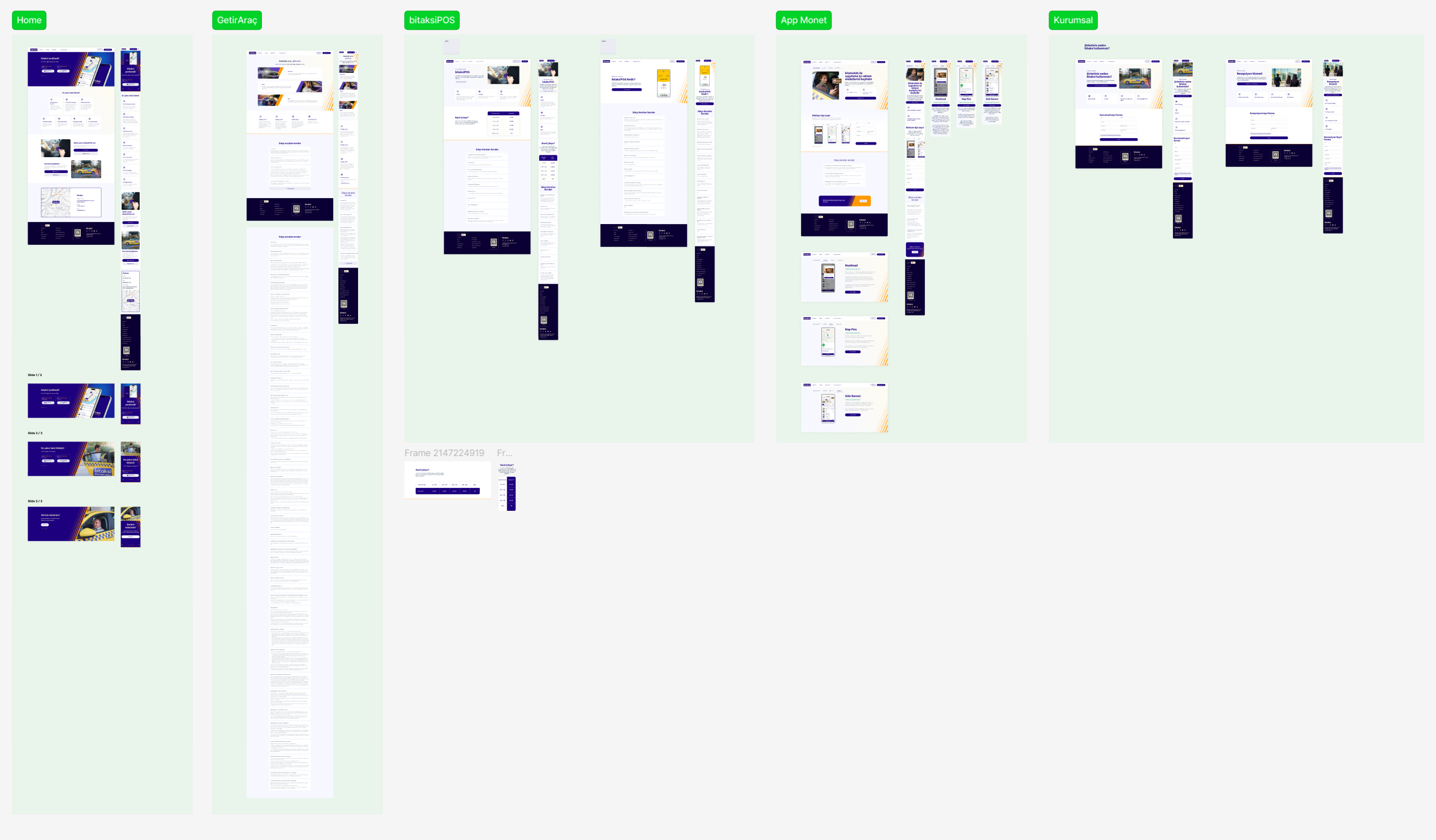
Figma view of the redesigned Bitaksi website pages, showcasing the new visual identity and layout design.
Interactive Animation (Rive):
Developing the idea of using an interactive animation to showcase Bitaksi's products in an engaging way.
Designing the animation's states and user interactions in Rive. Collaborating with developers (or handling front-end aspects yourself if applicable) to integrate the Rive animation seamlessly into the website.
Video: Bitaksi website's interactive product showcase using Rive animation.
Rive animation
Content Creation/Curation
Working with stakeholders to develop or refine website copy and imagery.

Collection of UI designs and content snippets from the Bitaksi website project, highlighting the content creation and refinement stage.
Responsive Design
Ensuring the website provided an optimal viewing experience across all devices (desktop, tablet, mobile).
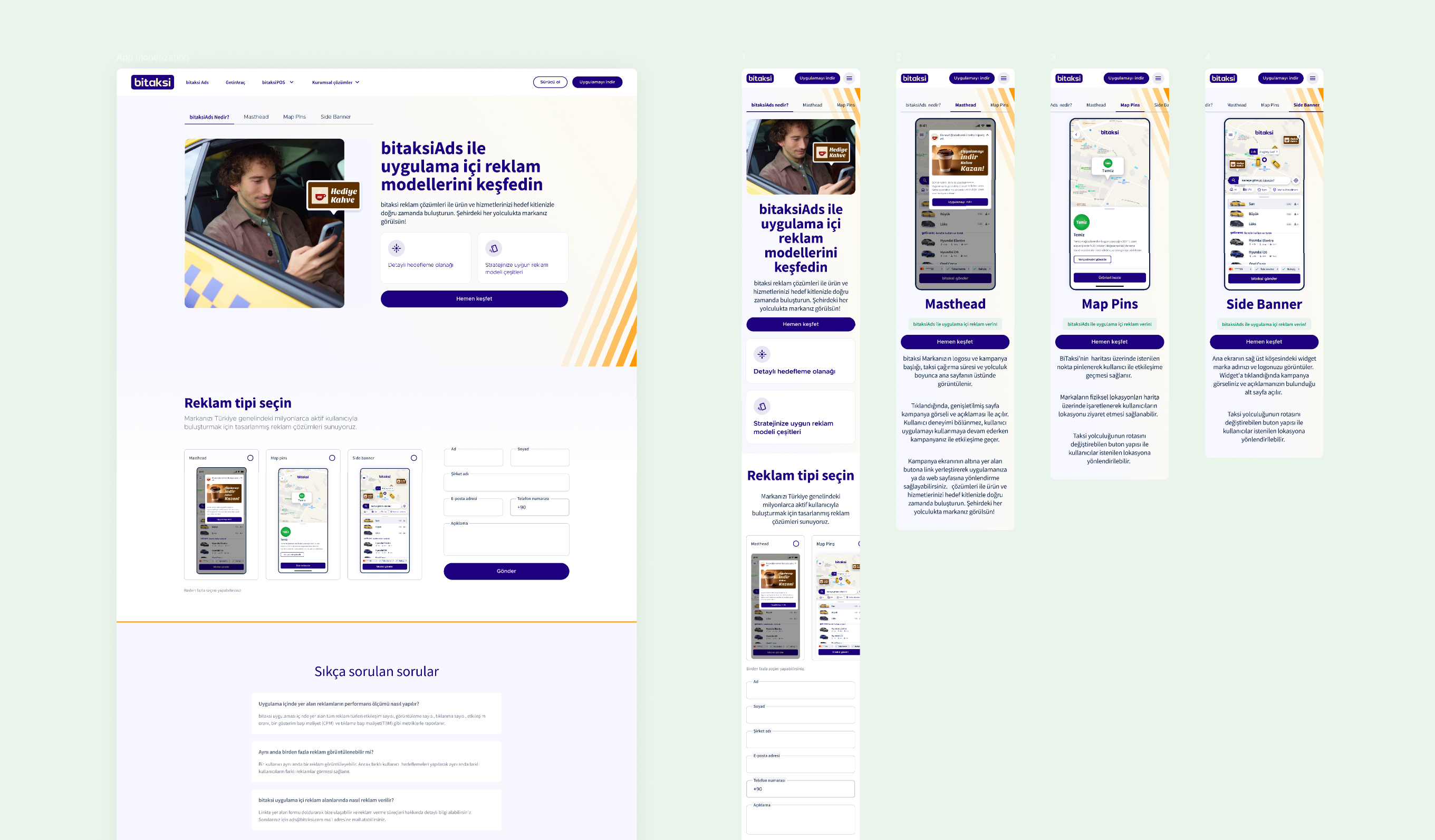
Collection of UI designs and content snippets from the Bitaksi website project, highlighting the content creation and refinement stage.
Testing & Iteration
Conducting usability tests (if applicable) and iterating on the design based on feedback.
Impact
Enhanced Brand Image
The new website significantly improved the perception of the Bitaksi brand, aligning it with the modern, tech-forward identity established by the rebrand.
Improved User Engagement
The interactive Rive animation and overall improved UX led to increased time on site and better engagement with product information.
Bitaksi Operations Panel: Designing for Efficiency
Context
Bitaksi's internal operations (managing drivers, trips, payments, campaigns, etc.) were handled through disparate or inefficient tools, leading to operational bottlenecks and difficulties in data management and oversight. This project was undertaken to create a centralized, user-friendly internal tool.
Problem
Lack of a unified and efficient internal platform for managing Bitaksi's core operations. This resulted in wasted time, potential for errors, and difficulty in getting a holistic view of operational performance. The operations team needed a tool that could streamline their complex daily tasks.
Solution
The design and development of a comprehensive, custom-built internal operations panel. This panel would serve as a single source of truth and a primary tool for the operations team, featuring modules for data visualization, taxi driver membership management, trip management, fare calculations, and campaign creation.
Process
User Research & Requirements Gathering
Conducting in-depth interviews and workshops with the Bitaksi operations team to understand their workflows, pain points, and specific needs for each module (driver management, trip oversight, payment processing, campaign setup, etc.).
Information Architecture & Workflow Design
Mapping out the complex information structures and user flows for the entire panel. Designing intuitive navigation and ensuring logical grouping of features.
Data Visualization Design
Creating effective dashboards and data visualization elements to provide actionable insights into operational performance, driver activity, trip data, and financial metrics.
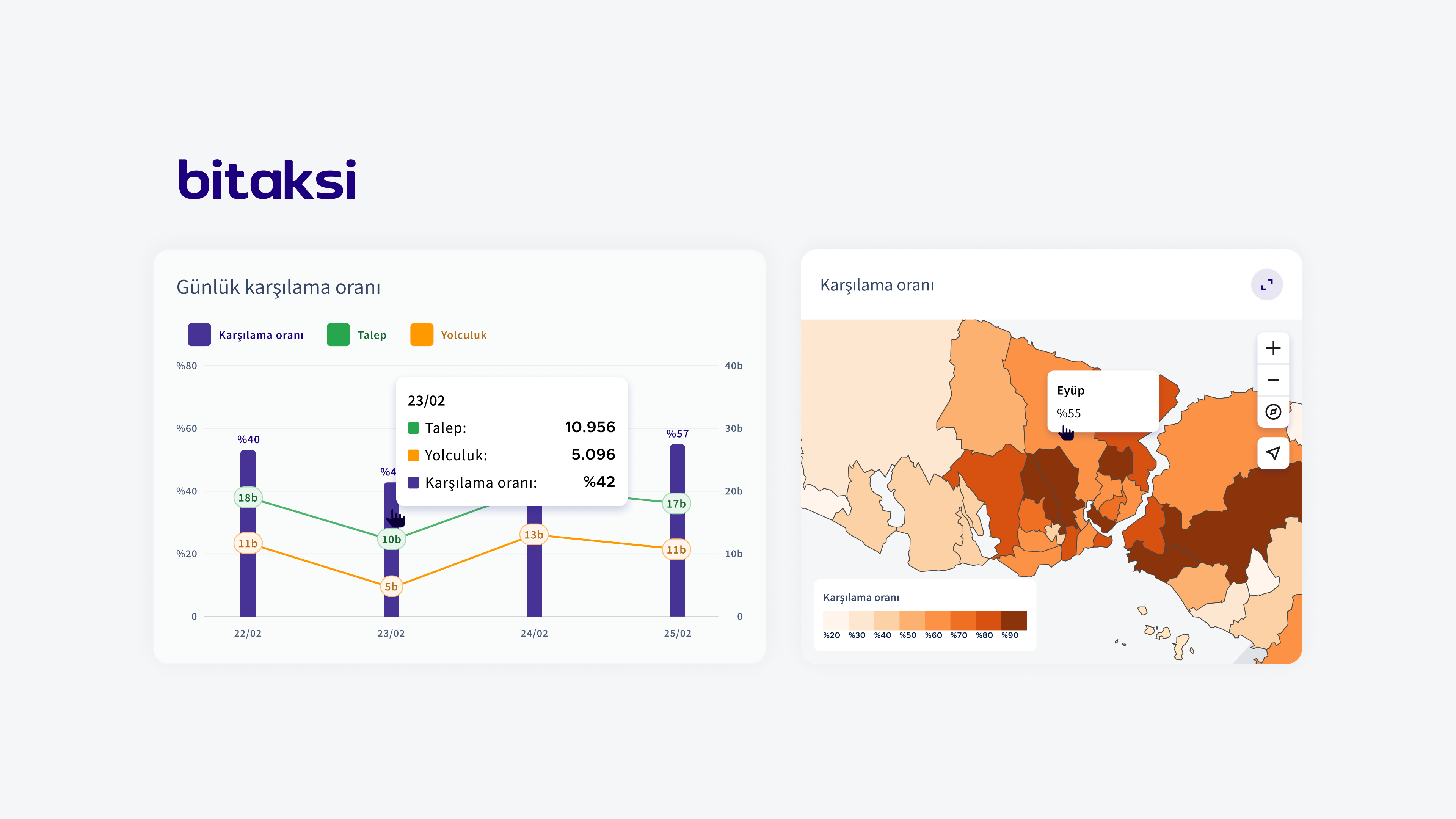
Data visualization examples from the Bitaksi operations panel, designed to track key performance indicators like fulfillment rates.
Design for Complex Modules
Designing interfaces for onboarding new drivers, managing driver profiles, tracking performance, and handling compliance.
Creating tools for real-time trip monitoring, issue resolution, and historical trip data analysis.
Designing systems for transparent fare calculation, managing adjustments, and processing payments.
Building an intuitive interface for setting up, launching, and monitoring promotional campaigns.
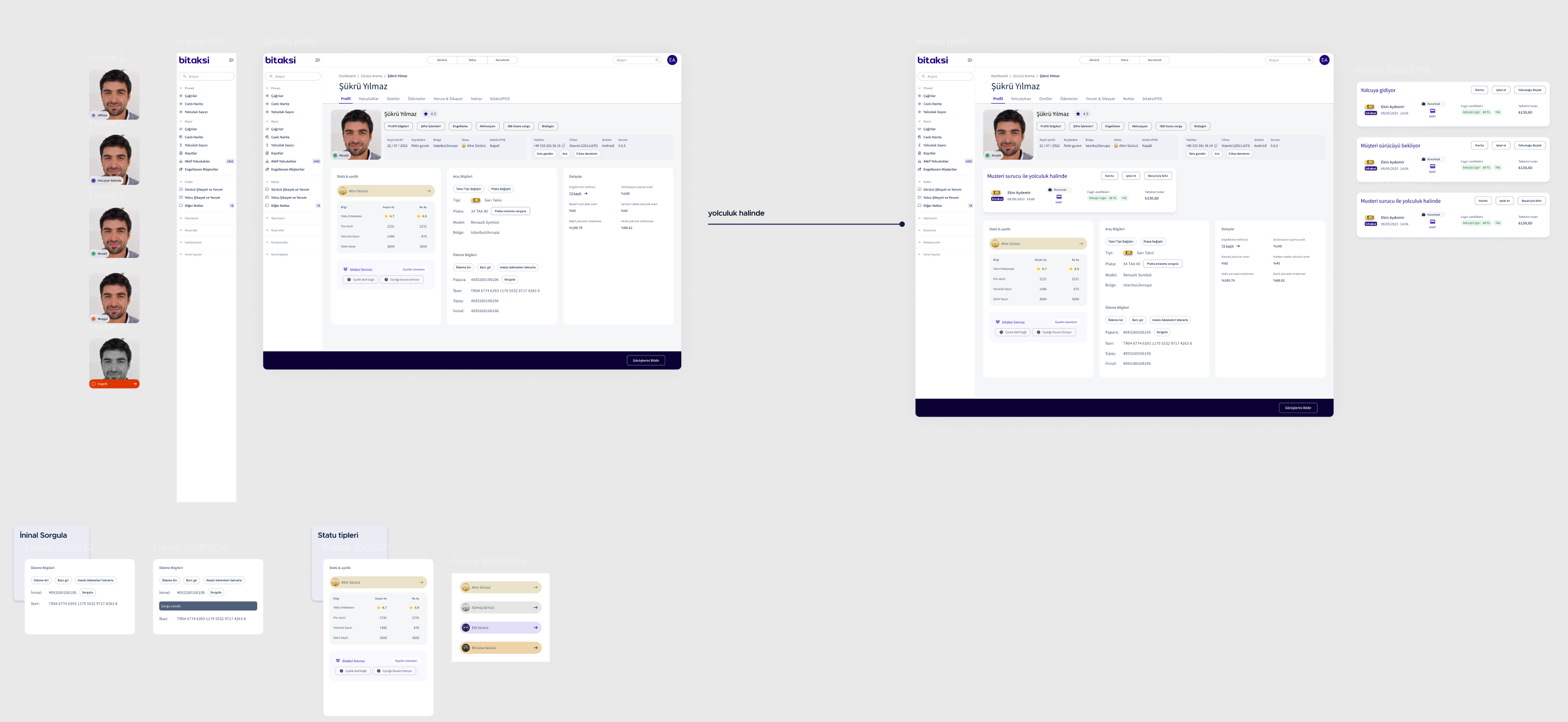
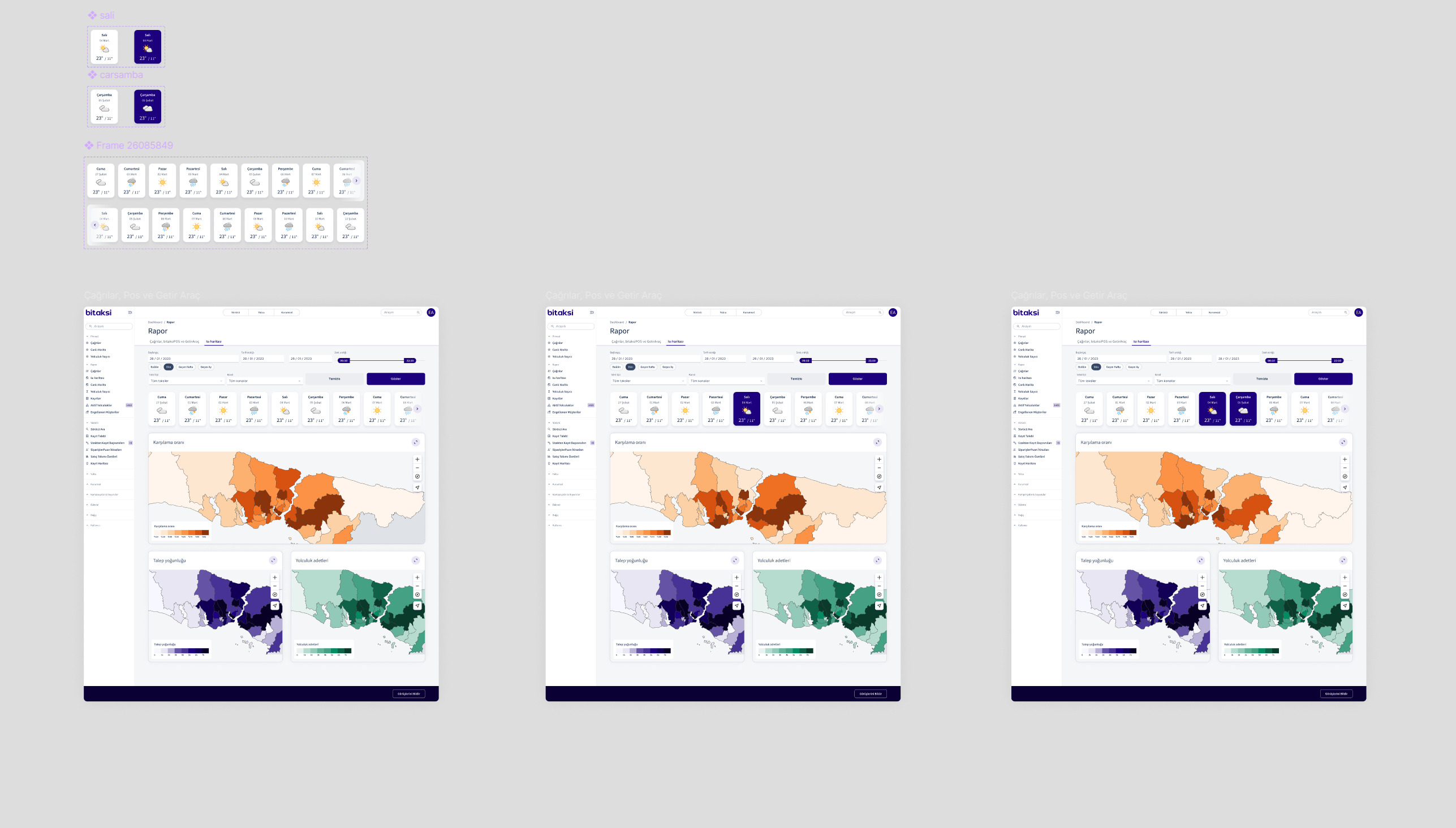
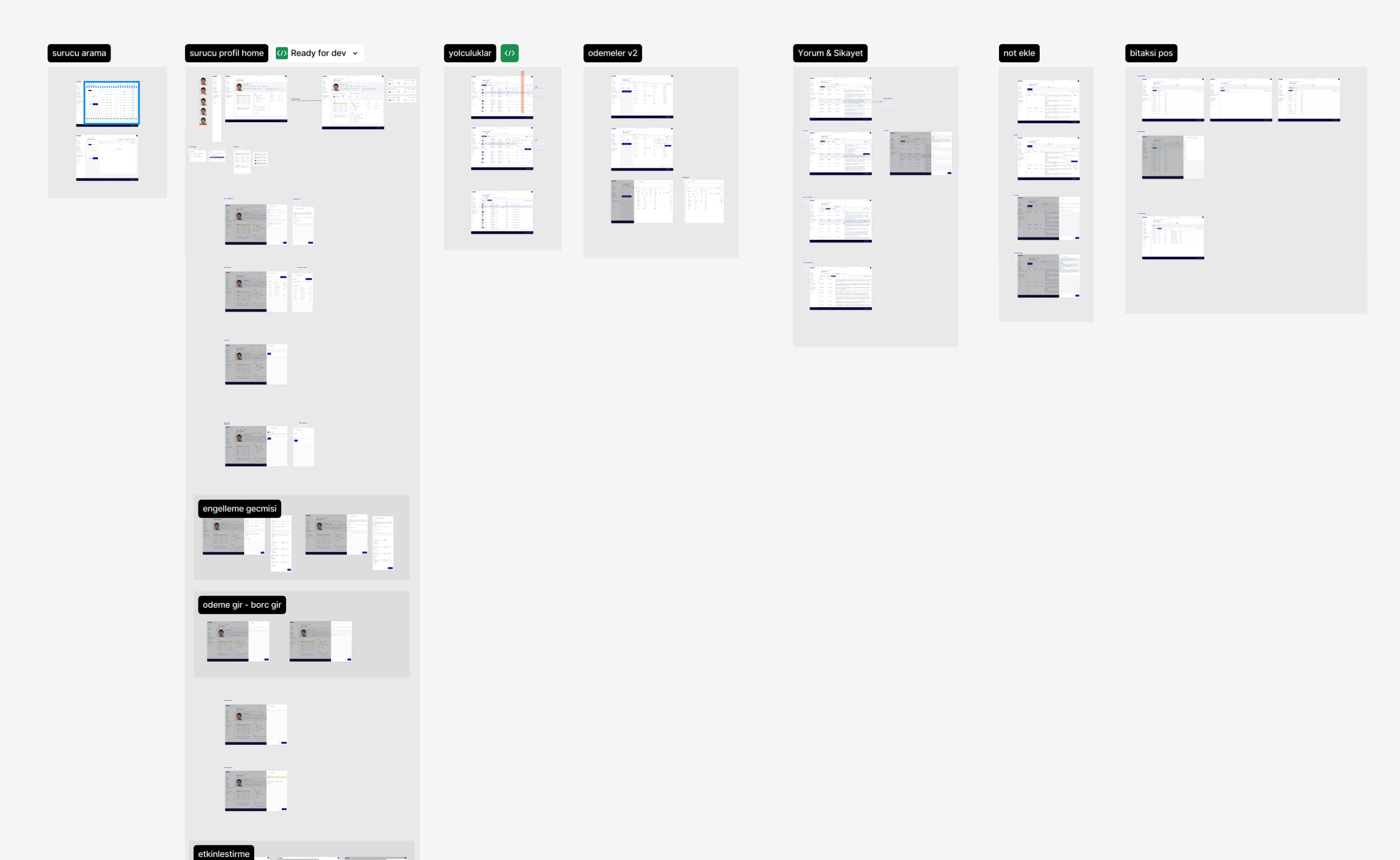
Collection of UI designs from Figma for various complex modules within the Bitaksi operations panel, showing different stages of design from wireframes to more detailed mockups.
Prototyping & Iterative Feedback
Creating interactive prototypes of key panel sections and iterating on the designs based on regular feedback from the operations team.

Screenshot of an interactive prototype flow in Figma for the bitaksi operations panel, used to demonstrate complex functionalities.
Impact
Significant Improvement in Operational Efficiency
Streamlined workflows and centralized tools reduced the time and effort required for daily operational tasks.
Enhanced Data Management & Accessibility
Provided a unified platform for accessing and managing critical operational data, leading to better decision-making.
Reduced Errors
Intuitive interfaces and clearer processes helped minimize errors in data entry and operational management.
Improved Oversight & Control
Dashboards and reporting features offered better visibility into overall operations, allowing for proactive management.
Positive Feedback from Operations Team
The new panel was well-received by the internal users, who found it more intuitive and efficient than previous methods.
Works
Schedule a call
bitaksi
Spearheaded Bitaksi's design transformation over two years, establishing two comprehensive design systems (the current one built independently), co-leading a full application rebrand, single-handedly redesigning the corporate website with interactive Rive animations, and designing a critical internal operations panel from scratch.
bitaksi
Details
Client
Bitaksi
Industries
Transportation / Mobility
My role
Co-Lead Product Designer
Tools
Figma
•
Rive
•
Miro
Project Duration
Jul 2023 - July 2025
•
2 yrs
Problem
Addressed a range of challenges including initial design inconsistencies and lack of a scalable design foundation, an outdated user interface requiring a full rebrand, the need for a modern and interactive corporate web presence, and inefficiencies in internal operations requiring a dedicated management panel.
Goals and objectives
To create a cohesive, modern, and user-centric experience across all Bitaksi platforms (passenger app, driver app, website, internal panel). Key objectives included:
- Establishing and evolving robust design systems to ensure consistency and scalability.
- Successfully rebranding the application to enhance brand perception and user appeal.
- Improving usability across all digital touchpoints.
- Developing an intuitive and efficient internal tool to streamline complex operational processes.
- Modernizing the company website to better showcase products and engage users.
My role & Responsibilities
In-house (1 year, sole designer)
Established the initial design system for the existing application. Designed key features such as the driver reporting screen (driver app), driver subscription flows (monthly/weekly), and the integration of the service fee in the passenger app.
Contractor (1 year)
Collaborated with Ali Düzenli on the comprehensive rebranding of the entire application. Independently created and developed the new, current design system. Single-handedly redesigned the corporate website, including implementing an interactive Rive animation for product showcasing. For the last 5 months, designed the entire Bitaksi operations panel (internal tool) covering data visualization, taxi driver membership management, trip management, fare calculations, and campaign creation.

“This case study will delve into the strategic process of developing Bitaksi's current design system and executing a comprehensive application rebrand. It will also touch upon other key projects that demonstrate a holistic approach to product design, including the initial design system, the corporate website redesign, and the development of the internal operations panel.”
The Challenge: Laying the Groundwork (Initial In-House Period)
Problem
Lack of a unified design language, inconsistencies.
Solution
Creation of the first design system for the existing app.
Process
Audit & Analysis
Conducted a thorough audit of the existing application (passenger and driver apps) to identify all UI components, styles, and inconsistencies.
Overview of disorganized Bitaksi app screens in Figma prior to design system implementation.
Defining Foundations
Established core elements like a unified color palette, typography scale, spacing guidelines, and iconography.
Detailing the foundational styles of the Bitaksi design system, including color primitives, typography, spacing, and elevation
Component Development
Designed and documented a basic library of reusable components (e.g., buttons, input fields, cards, navigation elements) in Figma.
A collection of UI components from the Bitaksi design system, including buttons, input fields, and navigation elements, displayed within their respective application contexts in Figma
Documentation & Handoff
Created initial documentation for developers on how to use the system and its components.
Example of developer handoff documentation: Bitaksi payment UI with design specifications, prepared for development.
Impact
Improved Consistency
Led to a more visually cohesive user interface across the application.
Increased Efficiency (Design & Development)
Streamlined the design process for new features and made development faster by providing ready-to-use components
Foundation for Future Growth
Provided a foundational structure that, while basic, helped stabilize the product's UI and set the stage for future, more comprehensive system development.
The Transformation: Rebrand & New Design System
Context
The evolving needs of Bitaksi and the strategic decision to undertake a comprehensive application rebrand. Transition from sole in-house designer to a contractor role, collaborating with external designers (Ali Düzenli) for the rebrand while independently leading the new design system's creation.
Problem
The existing application's UI/UX felt outdated and inconsistent. A more modern, scalable, and robust design foundation was needed to support the company's growth and new brand identity. The initial design system was not comprehensive enough for a full-scale rebrand and future product development.
Solution
Partnering with Ali Düzenli to redefine Bitaksi's visual identity, including logo, color palette, typography, and overall look and feel.
Building a new design system from the ground up in Figma to embody the new brand identity and provide a scalable framework for all Bitaksi products.
Process
Research & Planning
Analyzing the shortcomings of the first system, defining the scope and goals for the new system (e.g., full component coverage, accessibility considerations, clear documentation, tokenization strategy).
Atomic Design & Component Development
Systematically designing and building a comprehensive library of components in Figma, from atoms (colors, typography, icons, spacing) to molecules (buttons, input fields) and organisms (cards, navigation bars, modals). Ensuring components were flexible, reusable, and adhered to the new brand guidelines.
Collection of design assets and UI screens from the Bitaksi ecosystem, representing the elements covered in the detailed design system documentation.
Documentation & Guidelines
Creating detailed documentation for each component, including usage guidelines, states (default, hover, active, disabled), accessibility notes, and code snippets/specs for developers. Establishing clear guidelines for typography, color usage, spacing, and information architecture.
Collection of Figma screens and notes from the Bitaksi design system, highlighting component usage guidelines and consistent application, reflecting the system's maintenance and evolution strategy.
Governance & Evolution Strategy
Planning for how the design system would be maintained, updated, and adopted by the wider team. Implementing version control and a process for requesting new components or changes.
Impact
Modernized Brand & Enhanced User Perception
The rebrand significantly refreshed Bitaksi's image, making it more contemporary and appealing.
Vastly Improved UI/UX Consistency
The new design system ensured a unified look and feel across all application screens and platforms.
Increased Design & Development Velocity
Provided a robust library of pre-built, well-documented components, drastically speeding up the design and development of new features and updates.
Scalability & Maintainability
Created a flexible and scalable foundation that could easily adapt to future product needs and reduce design debt.
Empowered Collaboration
Clear documentation and a shared component library improved communication and collaboration between design and development teams.
Website Redesign: An Interactive Showcase
bitaksi website
Context
The existing corporate website was outdated, did not effectively communicate the brand's value proposition (especially post-rebrand), and lacked modern interactivity to engage users and showcase bitaksi's services. This project was undertaken as an independent initiative during my contractor period.
Problem
The previous website failed to reflect the new brand identity, offered a poor user experience, and wasn't optimized for converting visitors or clearly explaining the product offerings. It needed a complete overhaul to become a compelling digital storefront.
Solution
A complete redesign and rebuild of the bitaksi corporate website, focusing on a modern aesthetic, improved information architecture, clear communication of services, and an engaging, interactive user experience, highlighted by the integration of a Rive animation.
Process
Research & Strategy
Analyzing competitor websites, defining target audiences for the website, and setting clear goals (e.g., improve brand perception, increase user engagement, clearly present product features).
Information Architecture & Wireframing
Restructuring the website content for intuitive navigation and creating wireframes for key pages.
Visual Design
Applying the new Bitaksi brand guidelines to create a visually appealing and modern design. Designing all UI elements and page layouts.
Figma view of the redesigned Bitaksi website pages, showcasing the new visual identity and layout design.
Interactive Animation (Rive):
Developing the idea of using an interactive animation to showcase Bitaksi's products in an engaging way.
Designing the animation's states and user interactions in Rive. Collaborating with developers (or handling front-end aspects yourself if applicable) to integrate the Rive animation seamlessly into the website.
Video: Bitaksi website's interactive product showcase using Rive animation.
Rive animation
Content Creation/Curation
Working with stakeholders to develop or refine website copy and imagery.
Collection of UI designs and content snippets from the Bitaksi website project, highlighting the content creation and refinement stage.
Responsive Design
Ensuring the website provided an optimal viewing experience across all devices (desktop, tablet, mobile).
Collection of UI designs and content snippets from the Bitaksi website project, highlighting the content creation and refinement stage.
Testing & Iteration
Conducting usability tests (if applicable) and iterating on the design based on feedback.
Impact
Enhanced Brand Image
The new website significantly improved the perception of the Bitaksi brand, aligning it with the modern, tech-forward identity established by the rebrand.
Improved User Engagement
The interactive Rive animation and overall improved UX led to increased time on site and better engagement with product information.
Bitaksi Operations Panel: Designing for Efficiency
Context
Bitaksi's internal operations (managing drivers, trips, payments, campaigns, etc.) were handled through disparate or inefficient tools, leading to operational bottlenecks and difficulties in data management and oversight. This project was undertaken to create a centralized, user-friendly internal tool.
Problem
Lack of a unified and efficient internal platform for managing Bitaksi's core operations. This resulted in wasted time, potential for errors, and difficulty in getting a holistic view of operational performance. The operations team needed a tool that could streamline their complex daily tasks.
Solution
The design and development of a comprehensive, custom-built internal operations panel. This panel would serve as a single source of truth and a primary tool for the operations team, featuring modules for data visualization, taxi driver membership management, trip management, fare calculations, and campaign creation.
Process
User Research & Requirements Gathering
Conducting in-depth interviews and workshops with the Bitaksi operations team to understand their workflows, pain points, and specific needs for each module (driver management, trip oversight, payment processing, campaign setup, etc.).
Information Architecture & Workflow Design
Mapping out the complex information structures and user flows for the entire panel. Designing intuitive navigation and ensuring logical grouping of features.
Data Visualization Design
Creating effective dashboards and data visualization elements to provide actionable insights into operational performance, driver activity, trip data, and financial metrics.
Data visualization examples from the Bitaksi operations panel, designed to track key performance indicators like fulfillment rates.
Design for Complex Modules
Designing interfaces for onboarding new drivers, managing driver profiles, tracking performance, and handling compliance.
Creating tools for real-time trip monitoring, issue resolution, and historical trip data analysis.
Designing systems for transparent fare calculation, managing adjustments, and processing payments.
Building an intuitive interface for setting up, launching, and monitoring promotional campaigns.
Collection of UI designs from Figma for various complex modules within the Bitaksi operations panel, showing different stages of design from wireframes to more detailed mockups.
Prototyping & Iterative Feedback
Creating interactive prototypes of key panel sections and iterating on the designs based on regular feedback from the operations team.
Screenshot of an interactive prototype flow in Figma for the bitaksi operations panel, used to demonstrate complex functionalities.
Impact
Significant Improvement in Operational Efficiency
Streamlined workflows and centralized tools reduced the time and effort required for daily operational tasks.
Enhanced Data Management & Accessibility
Provided a unified platform for accessing and managing critical operational data, leading to better decision-making.
Reduced Errors
Intuitive interfaces and clearer processes helped minimize errors in data entry and operational management.
Improved Oversight & Control
Dashboards and reporting features offered better visibility into overall operations, allowing for proactive management.
Positive Feedback from Operations Team
The new panel was well-received by the internal users, who found it more intuitive and efficient than previous methods.
Works
Schedule a call

Ekin Aydemir
Product designer
Work experience
2025

Now
Design System & Motion Designer at Midas
2023
2025
Self Employed Product Designer at Duck rocks
2023
2025
Product Designer at bitaksi
2022
2023
Product Designer at Appcent
2019
2022
Freelance Product Designer
Education
2018
2022
Bachelor of Industrial Design at Middle East Technical University

Download CV
bitaksi
Spearheaded Bitaksi's design transformation over two years, establishing two comprehensive design systems (the current one built independently), co-leading a full application rebrand, single-handedly redesigning the corporate website with interactive Rive animations, and designing a critical internal operations panel from scratch.
bitaksi
Details
Client
Bitaksi
Industries
Transportation / Mobility
My role
Co-Lead Product Designer
Tools
Figma
•
Rive
•
Miro
Project Duration
Jul 2023 - July 2025
•
2 yrs
Problem
Addressed a range of challenges including initial design inconsistencies and lack of a scalable design foundation, an outdated user interface requiring a full rebrand, the need for a modern and interactive corporate web presence, and inefficiencies in internal operations requiring a dedicated management panel.
Goals and objectives
To create a cohesive, modern, and user-centric experience across all Bitaksi platforms (passenger app, driver app, website, internal panel). Key objectives included:
- Establishing and evolving robust design systems to ensure consistency and scalability.
- Successfully rebranding the application to enhance brand perception and user appeal.
- Improving usability across all digital touchpoints.
- Developing an intuitive and efficient internal tool to streamline complex operational processes.
- Modernizing the company website to better showcase products and engage users.
My role & Responsibilities
In-house (1 year, sole designer)
Established the initial design system for the existing application. Designed key features such as the driver reporting screen (driver app), driver subscription flows (monthly/weekly), and the integration of the service fee in the passenger app.
Contractor (1 year)
Collaborated with Ali Düzenli on the comprehensive rebranding of the entire application. Independently created and developed the new, current design system. Single-handedly redesigned the corporate website, including implementing an interactive Rive animation for product showcasing. For the last 5 months, designed the entire Bitaksi operations panel (internal tool) covering data visualization, taxi driver membership management, trip management, fare calculations, and campaign creation.

“This case study will delve into the strategic process of developing Bitaksi's current design system and executing a comprehensive application rebrand. It will also touch upon other key projects that demonstrate a holistic approach to product design, including the initial design system, the corporate website redesign, and the development of the internal operations panel.”
The Challenge: Laying the Groundwork (Initial In-House Period)
Problem
Lack of a unified design language, inconsistencies.
Solution
Creation of the first design system for the existing app.
Process
Audit & Analysis
Conducted a thorough audit of the existing application (passenger and driver apps) to identify all UI components, styles, and inconsistencies.
Overview of disorganized Bitaksi app screens in Figma prior to design system implementation.
Defining Foundations
Established core elements like a unified color palette, typography scale, spacing guidelines, and iconography.
Detailing the foundational styles of the Bitaksi design system, including color primitives, typography, spacing, and elevation
Component Development
Designed and documented a basic library of reusable components (e.g., buttons, input fields, cards, navigation elements) in Figma.
A collection of UI components from the Bitaksi design system, including buttons, input fields, and navigation elements, displayed within their respective application contexts in Figma
Documentation & Handoff
Created initial documentation for developers on how to use the system and its components.
Example of developer handoff documentation: Bitaksi payment UI with design specifications, prepared for development.
Impact
Improved Consistency
Led to a more visually cohesive user interface across the application.
Increased Efficiency (Design & Development)
Streamlined the design process for new features and made development faster by providing ready-to-use components
Foundation for Future Growth
Provided a foundational structure that, while basic, helped stabilize the product's UI and set the stage for future, more comprehensive system development.
The Transformation: Rebrand & New Design System
Context
The evolving needs of Bitaksi and the strategic decision to undertake a comprehensive application rebrand. Transition from sole in-house designer to a contractor role, collaborating with external designers (Ali Düzenli) for the rebrand while independently leading the new design system's creation.
Problem
The existing application's UI/UX felt outdated and inconsistent. A more modern, scalable, and robust design foundation was needed to support the company's growth and new brand identity. The initial design system was not comprehensive enough for a full-scale rebrand and future product development.
Solution
Partnering with Ali Düzenli to redefine Bitaksi's visual identity, including logo, color palette, typography, and overall look and feel.
Building a new design system from the ground up in Figma to embody the new brand identity and provide a scalable framework for all Bitaksi products.
Process
Research & Planning
Analyzing the shortcomings of the first system, defining the scope and goals for the new system (e.g., full component coverage, accessibility considerations, clear documentation, tokenization strategy).
Atomic Design & Component Development
Systematically designing and building a comprehensive library of components in Figma, from atoms (colors, typography, icons, spacing) to molecules (buttons, input fields) and organisms (cards, navigation bars, modals). Ensuring components were flexible, reusable, and adhered to the new brand guidelines.
Collection of design assets and UI screens from the Bitaksi ecosystem, representing the elements covered in the detailed design system documentation.
Documentation & Guidelines
Creating detailed documentation for each component, including usage guidelines, states (default, hover, active, disabled), accessibility notes, and code snippets/specs for developers. Establishing clear guidelines for typography, color usage, spacing, and information architecture.
Collection of Figma screens and notes from the Bitaksi design system, highlighting component usage guidelines and consistent application, reflecting the system's maintenance and evolution strategy.
Governance & Evolution Strategy
Planning for how the design system would be maintained, updated, and adopted by the wider team. Implementing version control and a process for requesting new components or changes.
Impact
Modernized Brand & Enhanced User Perception
The rebrand significantly refreshed Bitaksi's image, making it more contemporary and appealing.
Vastly Improved UI/UX Consistency
The new design system ensured a unified look and feel across all application screens and platforms.
Increased Design & Development Velocity
Provided a robust library of pre-built, well-documented components, drastically speeding up the design and development of new features and updates.
Scalability & Maintainability
Created a flexible and scalable foundation that could easily adapt to future product needs and reduce design debt.
Empowered Collaboration
Clear documentation and a shared component library improved communication and collaboration between design and development teams.
Website Redesign: An Interactive Showcase
bitaksi website
Context
The existing corporate website was outdated, did not effectively communicate the brand's value proposition (especially post-rebrand), and lacked modern interactivity to engage users and showcase bitaksi's services. This project was undertaken as an independent initiative during my contractor period.
Problem
The previous website failed to reflect the new brand identity, offered a poor user experience, and wasn't optimized for converting visitors or clearly explaining the product offerings. It needed a complete overhaul to become a compelling digital storefront.
Solution
A complete redesign and rebuild of the bitaksi corporate website, focusing on a modern aesthetic, improved information architecture, clear communication of services, and an engaging, interactive user experience, highlighted by the integration of a Rive animation.
Process
Research & Strategy
Analyzing competitor websites, defining target audiences for the website, and setting clear goals (e.g., improve brand perception, increase user engagement, clearly present product features).
Information Architecture & Wireframing
Restructuring the website content for intuitive navigation and creating wireframes for key pages.
Visual Design
Applying the new Bitaksi brand guidelines to create a visually appealing and modern design. Designing all UI elements and page layouts.
Figma view of the redesigned Bitaksi website pages, showcasing the new visual identity and layout design.
Interactive Animation (Rive):
Developing the idea of using an interactive animation to showcase Bitaksi's products in an engaging way.
Designing the animation's states and user interactions in Rive. Collaborating with developers (or handling front-end aspects yourself if applicable) to integrate the Rive animation seamlessly into the website.
Video: Bitaksi website's interactive product showcase using Rive animation.
Rive animation
Content Creation/Curation
Working with stakeholders to develop or refine website copy and imagery.
Collection of UI designs and content snippets from the Bitaksi website project, highlighting the content creation and refinement stage.
Responsive Design
Ensuring the website provided an optimal viewing experience across all devices (desktop, tablet, mobile).
Collection of UI designs and content snippets from the Bitaksi website project, highlighting the content creation and refinement stage.
Testing & Iteration
Conducting usability tests (if applicable) and iterating on the design based on feedback.
Impact
Enhanced Brand Image
The new website significantly improved the perception of the Bitaksi brand, aligning it with the modern, tech-forward identity established by the rebrand.
Improved User Engagement
The interactive Rive animation and overall improved UX led to increased time on site and better engagement with product information.
Bitaksi Operations Panel: Designing for Efficiency
Context
Bitaksi's internal operations (managing drivers, trips, payments, campaigns, etc.) were handled through disparate or inefficient tools, leading to operational bottlenecks and difficulties in data management and oversight. This project was undertaken to create a centralized, user-friendly internal tool.
Problem
Lack of a unified and efficient internal platform for managing Bitaksi's core operations. This resulted in wasted time, potential for errors, and difficulty in getting a holistic view of operational performance. The operations team needed a tool that could streamline their complex daily tasks.
Solution
The design and development of a comprehensive, custom-built internal operations panel. This panel would serve as a single source of truth and a primary tool for the operations team, featuring modules for data visualization, taxi driver membership management, trip management, fare calculations, and campaign creation.
Process
User Research & Requirements Gathering
Conducting in-depth interviews and workshops with the Bitaksi operations team to understand their workflows, pain points, and specific needs for each module (driver management, trip oversight, payment processing, campaign setup, etc.).
Information Architecture & Workflow Design
Mapping out the complex information structures and user flows for the entire panel. Designing intuitive navigation and ensuring logical grouping of features.
Data Visualization Design
Creating effective dashboards and data visualization elements to provide actionable insights into operational performance, driver activity, trip data, and financial metrics.
Data visualization examples from the Bitaksi operations panel, designed to track key performance indicators like fulfillment rates.
Design for Complex Modules
Designing interfaces for onboarding new drivers, managing driver profiles, tracking performance, and handling compliance.
Creating tools for real-time trip monitoring, issue resolution, and historical trip data analysis.
Designing systems for transparent fare calculation, managing adjustments, and processing payments.
Building an intuitive interface for setting up, launching, and monitoring promotional campaigns.
Collection of UI designs from Figma for various complex modules within the Bitaksi operations panel, showing different stages of design from wireframes to more detailed mockups.
Prototyping & Iterative Feedback
Creating interactive prototypes of key panel sections and iterating on the designs based on regular feedback from the operations team.
Screenshot of an interactive prototype flow in Figma for the bitaksi operations panel, used to demonstrate complex functionalities.
Impact
Significant Improvement in Operational Efficiency
Streamlined workflows and centralized tools reduced the time and effort required for daily operational tasks.
Enhanced Data Management & Accessibility
Provided a unified platform for accessing and managing critical operational data, leading to better decision-making.
Reduced Errors
Intuitive interfaces and clearer processes helped minimize errors in data entry and operational management.
Improved Oversight & Control
Dashboards and reporting features offered better visibility into overall operations, allowing for proactive management.
Positive Feedback from Operations Team
The new panel was well-received by the internal users, who found it more intuitive and efficient than previous methods.